

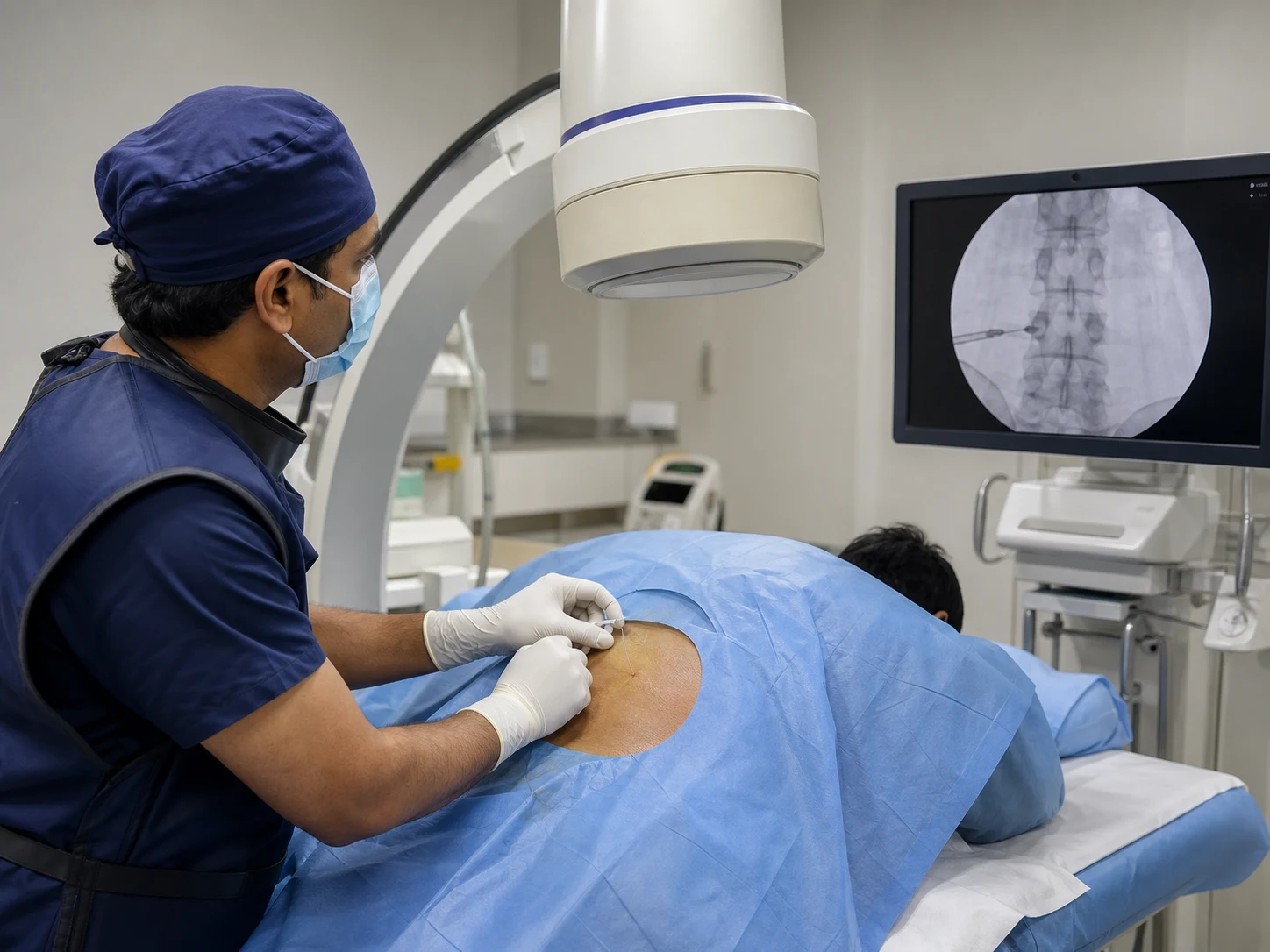
Cervical (neck): Roots C2 through C8. These are the ones behind cervical radiculopathy, pain, tingling, or weakness that travels down one arm, sometimes into the hand. A cervical NRB targets the specific root responsible.
What Is a Nerve Root Block?
A nerve root block (sometimes called a selective nerve root block, or SNRB) is a single, precisely placed injection at one nerve root as it exits your spinal canal. The needle goes in under real-time fluoroscopy, live X-ray imaging, and delivers a combination of local anaesthetic and corticosteroid directly to that nerve. That's what makes it fundamentally different from an epidural steroid injection. An epidural floods a broader region of the spinal canal, bathing several nerve roots at once. Useful in its own right, but it can't pinpoint which specific root is the problem. An NRB can.
- The therapeutic side: the anaesthetic numbs the nerve immediately, and the steroid reduces the inflammation that's been irritating it, relief that can last weeks to months in the right patient.
- The diagnostic side: if your pain disappears within the first hour of the injection, that confirms the targeted nerve root is the one generating your symptoms. If it doesn't, your specialist knows to look elsewhere.
How Does a Nerve Root Block Work?
When a disc herniates, a vertebra degenerates, or the foramen narrows, the exiting nerve root is compressed and chemically irritated. The body releases inflammatory mediators that sensitise the nerve root and amplify pain transmission.
Local anaesthetic blocks sodium channels in the nerve fibre membrane, immediately interrupting pain transmission. This produces rapid but temporary relief and tells the specialist which nerve is responsible. Corticosteroid over the following days and weeks to suppress the inflammatory cascade and decrease the environment that keeps the nerve sensitised, creating a window for meaningful physiotherapy.
Types of Nerve Root Blocks
Different sections of the spine, different nerve roots, different symptoms:
Lumbar (lower back): Roots L1 through S1. This is where sciatica lives, radiating pain, numbness, or weakness running down one leg, sometimes all the way to the foot. By far the most common reason people end up in a conversation about NRB.
Thoracic (mid-back): Less common, but thoracic nerve root blocks target pain that wraps around the ribcage or chest wall in a band-like pattern, often after an injury or in degenerative thoracic spine conditions.
In some cases involving multilevel cervical pathology, your specialist may combine an epidural approach with selective nerve-root targeting to address the right level while still covering a broader area.
Conditions Treated with NRB in Mumbai
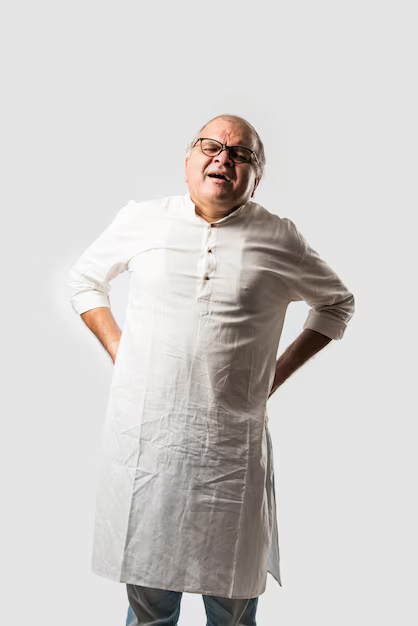
Sciatica and lumbar radiculopathy - Radiating leg pain, numbness, or weakness from an irritated nerve root.
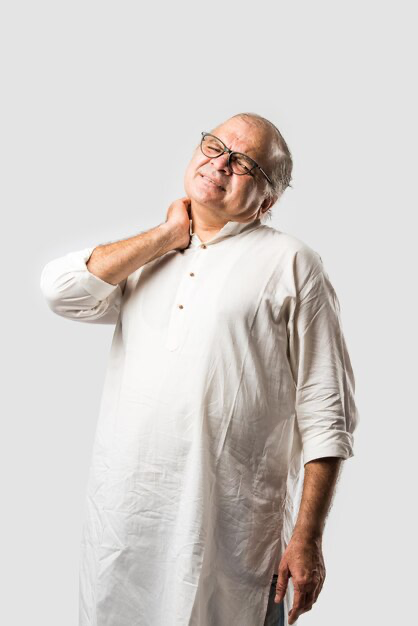
Cervical radiculopathy - Arm pain, hand numbness, or weakness from a compressed cervical nerve root.
Herniated or slipped disc - Single-level disc herniation compressing a specific spinal nerve root.
Foraminal stenosis - Narrowing of the nerve exit channel causing chronic nerve compression.
Post-surgical radicular pain - Persistent nerve-root pain after spinal surgery.
Who Is a Suitable Candidate?
You might be, if:
You've had radiating arm or leg pain for more than four to six weeks that hasn't settled with medication and physiotherapy
An MRI confirms a herniated disc or narrowed foramen at a specific spinal level
Your pain clearly follows the pathway of a single nerve root
Your MRI shows problems at multiple levels and nobody's sure which one is actually symptomatic, this is one of the most valuable diagnostic uses
You'd rather avoid or delay spinal surgery if a less invasive option can provide meaningful relief
You're probably not a candidate if you have an active spinal infection, uncontrolled bleeding risk, a known allergy to contrast dye or corticosteroids, or active cancer at the injection site. Diabetic patients can still have NRB, but blood glucose needs close monitoring afterwards since corticosteroids cause a temporary spike.
Best Doctors to Perform NRB Treatment in Mumbai


The NRB Procedure, Step by Step
Before the procedure:
- Review of your medical history, medications, and spinal imaging
- Pausing NSAIDs and blood thinners for 7 days, only on medical advice
- Disclosing allergies, particularly to iodine contrast, local anaesthetic, or corticosteroids
- Monitoring blood glucose if diabetic
What happens during treatment:
- STEP 1Positioning - You lie face down, with a pillow under the abdomen to open the spinal levels.
- STEP 2Sterile preparation - The skin is cleaned and local anaesthetic numbs the area.
- STEP 3Fluoroscopic guidance - Real-time X-ray identifies the target nerve-root foramen.
- STEP 4Needle placement - The needle advances under continuous fluoroscopy to the precise spinal level.
- STEP 5Contrast confirmation - Contrast confirms correct needle position before any treatment is delivered.
- STEP 6Injection - Local anaesthetic and corticosteroid are slowly injected around the nerve root.
- STEP 7Recovery and discharge - You rest for 20-30 minutes; the first-hour response provides critical diagnostic information.
Recovery and Aftercare
A temporary increase in nerve symptoms or injection-site soreness during the first 24-48 hours is normal, as local anaesthetic wears off and before the steroid takes effect.
| Time | What to Expect |
|---|---|
| Immediately after | Possible rapid relief from local anaesthetic, providing diagnostic information |
| First 24-48 hours | Anaesthetic wears off; a temporary return of symptoms can occur |
| Days 3-7 | Steroid effect begins to build; nerve pain may reduce |
| Weeks 1-4 | Radicular symptoms improve; physiotherapy can begin |
| Weeks 4-12 | Maximum therapeutic benefit |
| Months 3-6 | Meaningful relief for many patients who respond |
When to Seek Medical Advice
Seek immediate medical attention if you develop fever above 38°C, rapidly worsening leg or arm weakness, loss of bladder or bowel control, or severe uncontrolled pain at the injection site. These are rare but important red-flag symptoms.
Benefits, Risks, and Side Effects
Benefits
Pinpoint diagnostic precision - Confirms the exact nerve root causing pain
Targeted therapeutic relief - Delivers anti-inflammatory medication directly to the sensitised nerve root
Non-surgical - No incisions, general anaesthesia, or hospital admission
Guides surgical planning - Confirmation of a specific root makes surgical decisions more precise, reducing wrong-level risk
May help avoid surgery - Clinical evidence shows NRB can reduce surgical rates in radiculopathy when combined with rehabilitation
Risks and Side Effects
Temporary soreness - Generally settles within 1-3 days
Brief symptom worsening - As local anaesthetic wears off, usually resolving within 24-48 hours
Temporary steroid effects - Facial flushing or elevated glucose in diabetic patients for 3-5 days
Rare procedural complications - Dural puncture, infection, or allergic reaction are recognised but rare, mitigated through sterile technique and imaging
Permanent nerve damage or paralysis are exceptionally rare with image-guided NRB performed by an experienced specialist at Nivaan.
Nerve Root Block Cost Considerations in Mumbai
Cost varies depending on the spinal level targeted, the number of nerve roots injected per session, the corticosteroid used, and whether fluoroscopic image guidance is included. Most patients require one to three sessions in total.
Results and Number of Sessions
Clinical evidence shows selective nerve root block provides significant pain relief in approximately 46-57% of patients at 6-12 months, with the strongest outcomes in acute single-level radiculopathy from disc herniation.
First hour - Relief from local anaesthetic confirms the nerve root
Days 3-7 - First meaningful improvement as the steroid effect builds
Weeks 4-12 - Maximum therapeutic benefit
3-6 months - Typical duration for responders; some maintain benefit beyond 12 months with physiotherapy
Sciatic nerve injection at the correct lumbar level for acute disc herniation consistently shows the strongest outcomes. Chronic, long-standing compression tends to produce more limited benefits.
Why Choose Nivaan Care for Nerve Root Block in Mumbai?
| Nerve Root Block | Nivaan Care | Standalone Injection |
|---|---|---|
| Who performs it | Interventional pain specialist under fluoroscopic guidance | General practitioner or clinic |
| Diagnosis | Exact nerve-root level confirmed before and after treatment | Symptom-based |
| Injection technique | Fluoroscopy-guided with contrast confirmation | Freehand or landmark-based |
| Rehabilitation | Personalised physiotherapy after injection | None |
| Follow-up care | Structured, ongoing recovery plan | Rarely structured |
Frequently Asked Questions
An epidural injection bathes a broader region and multiple nerve roots. A nerve root block targets a single, specific nerve root at a specific level, making it more precise both therapeutically and diagnostically.
Yes, this is one of its most important functions. Significant relief immediately after the injection confirms that nerve root is the source of your symptoms, guiding subsequent treatment decisions, including whether surgery is needed and at exactly which level.
Yes, generally. Side effects are typically mild and temporary. Serious complications are rare and significantly reduced by fluoroscopic guidance with contrast confirmation.
For many patients, yes. Clinical evidence shows selective nerve root block, particularly combined with rehabilitation, can reduce the likelihood of needing surgery. Its diagnostic function also means that when surgery is ultimately needed, the surgeon knows exactly which level to address.
Yes, NRB is offered as part of Nivaan Care's non-surgical, interventional pain management approach for patients in Mumbai.
This is exactly what a nerve root block can help determine. By testing one level at a time and observing the response, your specialist can confirm which specific level is symptomatic, rather than assuming based on imaging alone.
Before: pause NSAIDs and blood thinners for 7 days, only on medical advice; disclose all allergies. After: avoid NSAIDs for 48 hours, avoid strenuous exercise for 48 hours, and monitor blood glucose if diabetic.