

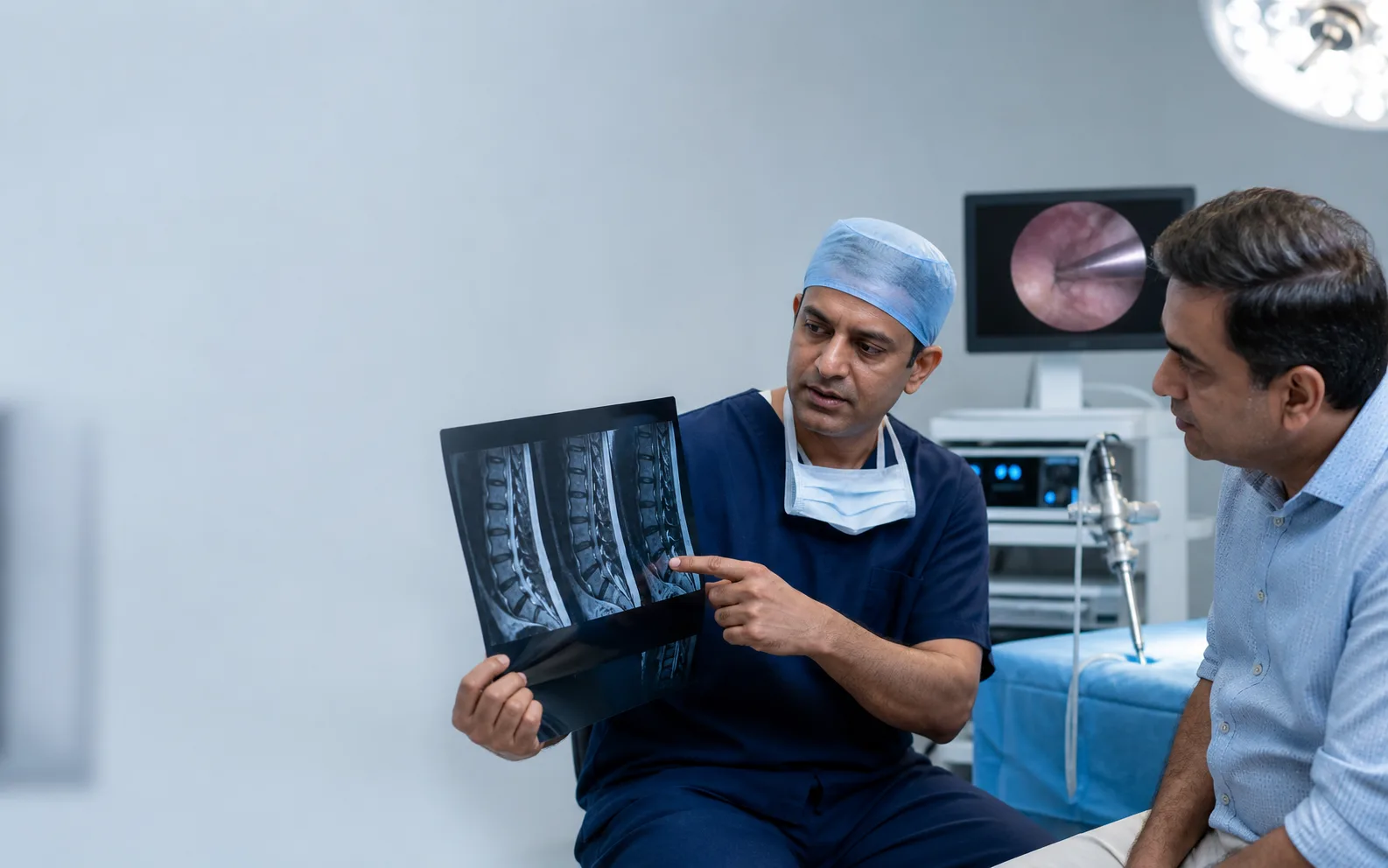
Transforaminal - enters through the foramen (the nerve root's natural exit point), guided by fluoroscopy. The more common route for lumbar herniations.
What Is Endoscopic Discectomy?
Endoscopic discectomy (also called endoscopic spine surgery, PELD, or percutaneous endoscopic lumbar discectomy) uses a tiny camera and instruments inserted through one small incision, typically under 1 cm, to remove disc material compressing a spinal nerve.
Lumbar endoscopic discectomy treats lower-back herniations, most commonly at L4–L5 or L5–S1. Cervical endoscopic discectomy addresses neck herniations. Both aim to decompress the nerve while preserving as much surrounding healthy tissue as possible.
Endoscopic Discectomy vs. Microdiscectomy vs. Discectomy
These terms get used loosely, the distinctions matter:
- Discectomy - the umbrella term for surgically removing disc material from a compressed nerve, regardless of technique.
- Microdiscectomy - uses an operating microscope through a 1.5–2 inch incision. Well-established and effective.
- Endoscopic discectomy - achieves the same goal through a smaller opening (under 1 cm) with a camera, meaning less tissue disruption and faster recovery. Both techniques produce strong results in experienced hands.
- Microendoscopic discectomy - a hybrid: small tubular retractor combined with endoscopic visualisation.
Transforaminal vs. Interlaminar Approach
Interlaminar - enters through the lamina, offering a broader view of the spinal canal. Often preferred for certain L5–S1 herniations and cervical cases.
The approach depends on where your disc fragment sits and how best to reach it safely.
Who Is a Candidate for Endoscopic Discectomy?
Generally considered when:
MRI or CT confirms a herniated disc causing nerve compression (protrusion, extrusion, or sequestration)
Pain, numbness, tingling, or weakness has persisted at least 6 weeks despite genuine conservative treatment
Physiotherapy, medication, and interventional options like epidural injections haven't provided adequate relief
Progressive neurological symptoms (worsening weakness, bowel/bladder changes) require more urgent evaluation
Generally not suitable for:
Significant spinal instability such as advanced spondylolisthesis
Active spinal infection or tumours
Bleeding disorders or anticoagulants that can't be safely stopped
Extensive scar tissue from prior surgery at the same level
Best Doctors to Endoscopic Discectomy in Mumbai


Diagnosis Before Considering Surgery
Before endoscopic discectomy is discussed, your evaluation needs a detailed history, a physical and neurological exam, and imaging. MRI is the gold standard for visualising the herniation and nerve compression; CT adds detail on bone anatomy when needed. This step, done properly, is what separates a justified surgical referral from a premature one.
The Non-Surgical Path First
At Nivaan, most patients with a herniated disc don't need surgery. The non-surgical approach typically includes:
- Structured physiotherapy and posture correction
- Medication and activity modification
- Image-guided epidural injections or nerve blocks to calm inflammation around the compressed nerve
- A genuine trial period with honest reassessment, not indefinite delay
When symptoms don't improve after that trial, or red-flag signs need urgent action, it's communicated directly, with support toward the right surgical opinion, rather than pushing conservative care past the point it can realistically help.
What the Procedure Involves?
Endoscopic discectomy surgery is typically performed under regional or general anaesthesia, in an operating theatre, by a spine surgeon:
- STEP 1A small incision, usually under 1cm, is made over the affected level.
- STEP 2Using fluoroscopic (X-ray) guidance, a tubular retractor and endoscope are inserted to the target disc.
- STEP 3The surgeon views the disc and nerve root on an external monitor and carefully removes the disc material causing compression.
- STEP 4The incision is closed, often with a single stitch or adhesive strip.
- STEP 5The procedure usually takes 1-2 hours, and many patients go home the same day or after one night's observation.
Endoscopic Discectomy Recovery Time
| Time | What to Expect |
|---|---|
| First 24-48 hours | Light walking encouraged; rest otherwise |
| First week | Mild discomfort; pain medication as needed; avoid bending, twisting, or lifting |
| Weeks 2-4 | Physiotherapy typically begins; gradual increase in activity |
| Weeks 4-6 | Most patients return to desk-based work |
| Up to 3 months | Full recovery, including return to more strenuous activity, with surgeon's clearance |
Risks, generally lower than open surgery but not zero, can include infection, bleeding, nerve irritation, dural tears, incomplete symptom relief, or, less commonly, disc reherniation. Any surgeon discussing this with you should walk through these honestly, not just the benefits.
Endoscopic Discectomy Cost in Mumbai
Cost typically ranges from roughly ₹1,00,000 to ₹2,50,000-plus, depending on the hospital, surgeon, and any additional levels treated. This is a broad market indication, not a Nivaan-specific quote, since exact pricing depends on your individual case and the treating facility. If your assessment points toward needing surgery, understanding realistic cost expectations is part of that conversation.
Endoscopic Discectomy at Nivaan
Nivaan's interventional pain specialists diagnose your condition, deliver non-surgical and interventional treatment, and give a straight opinion on whether conservative care is working. Endoscopic discectomy itself is performed by a spine surgeon in an operating theatre -that's not our scope. Where surgery is genuinely the right next step, that's communicated clearly with full diagnostic workup in hand, rather than overselling non-surgical care past its usefulness or rushing toward surgery prematurely.
Why Start With Nivaan Before Considering Surgery?
Assessment starts with an accurate diagnosis, not a predetermined treatment path, an interventional pain specialist confirms your exact diagnosis, a physiotherapist builds a genuine rehabilitation plan, and a pain counsellor supports the anxiety that comes with persistent back or nerve pain.
Frequently Asked Questions
Both remove disc material compressing a nerve. Microdiscectomy uses a microscope with a slightly larger incision; endoscopic uses a camera through a smaller one -less tissue disruption, quicker recovery.
Walking within a day. Desk work in 4-6 weeks. Full recovery around 3 months.
Clinics quote 85–95% from their own data. Independent evidence is more conservative but still favourable. Accurate patient selection is the strongest outcome predictor.
Roughly ₹1,00,000 to ₹2,50,000+. Get a specific estimate once your diagnosis is confirmed.
Most herniated discs improve with conservative treatment -physiotherapy, medication, and sometimes image-guided injections. Surgery is considered only after a genuine non-surgical trial hasn't delivered adequate relief.