

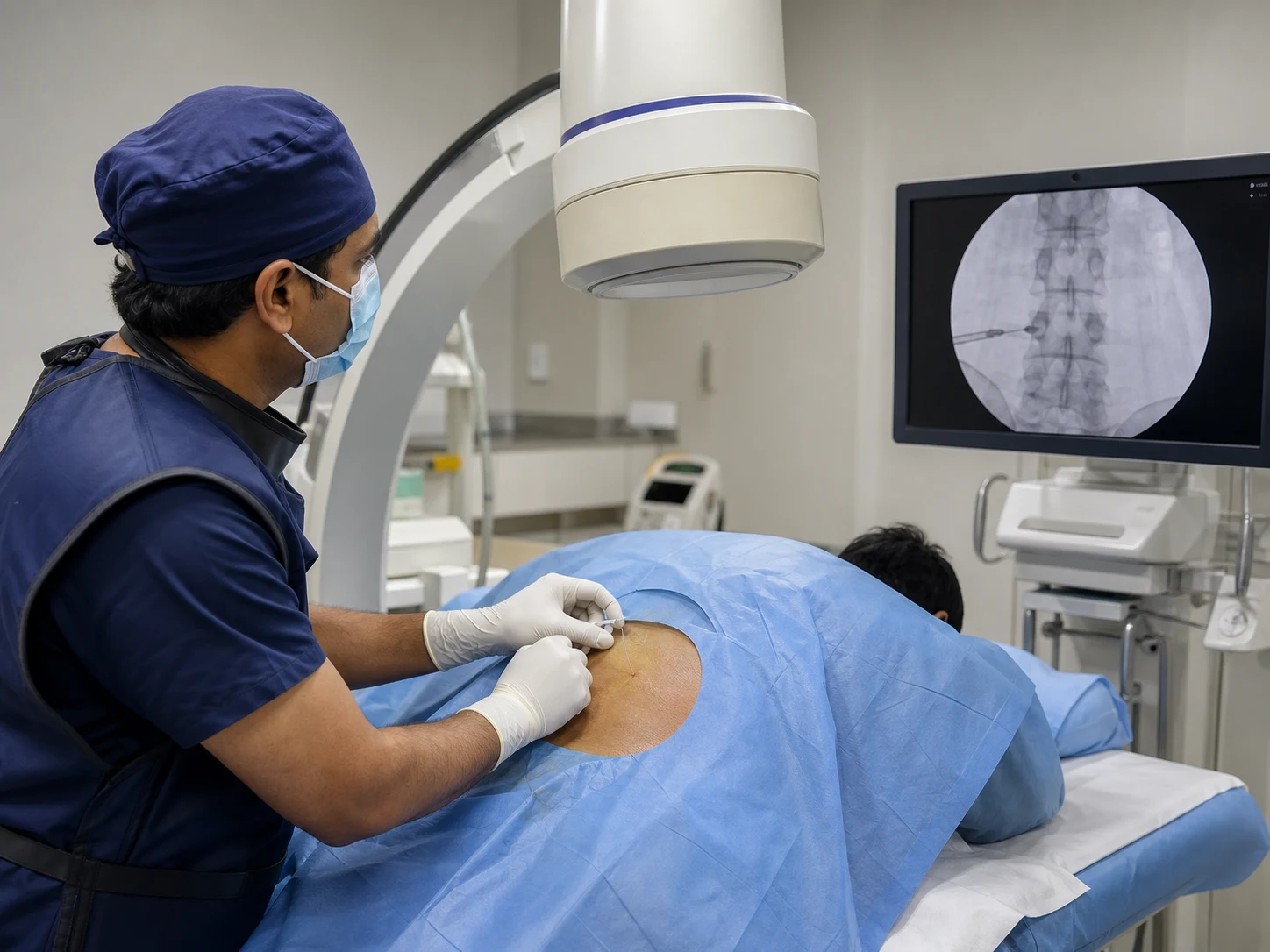
Cervical nerve root block: targets neck nerves at levels C2 to C8, used for arm or shoulder pain, hand numbness, or weakness from cervical radiculopathy.
What Is a Nerve Root Block?
A nerve root block, also called a selective nerve root block or SNRB, is a minimally invasive injection placed exactly where one nerve exits your spine. It is done under live X-ray guidance, called fluoroscopy, so the doctor can see exactly where the needle is going.
This is different from a regular epidural injection, which spreads medicine over a wider area of the spine and touches several nerves at once. A nerve root block targets just one nerve at one exact level. That precision gives it two jobs in one injection.
It treats. Local anaesthetic and a steroid are injected right at the nerve, calming the inflammation and interrupting the pain signal, sometimes for weeks or months.
It diagnoses. If your pain drops sharply within the first hour, that confirms this exact nerve is the true source of your pain, which guides every treatment decision that comes after, including whether surgery is really needed, and at which exact level.
How Does a Nerve Root Block Work?
A slipped disc, a worn vertebra, or a narrowed nerve channel can press on and irritate a spinal nerve. This releases chemicals in the body that keep the nerve sensitive, which is what makes the pain travel down your arm or leg.
The two medicines used work on different timelines. The local anaesthetic blocks the pain signal almost right away, giving fast but short-lived relief, and telling the doctor which nerve is really behind your symptoms. The steroid then works over the next few days to weeks, calming the swelling and inflammation around the nerve so it can settle properly. Together, they give both quick relief and longer healing time, which is when physiotherapy can start making a real difference.
Types of Nerve Root Blocks
Lumbar nerve root block: targets nerves at levels L1 to S1, used for sciatica and pain running down the leg or into the foot. An S1 block is commonly used for calf and outer-foot pain from an L5-S1 disc problem.
Thoracic nerve root block: targets mid-back nerves, used for chest-wall or band-like pain around the torso from a thoracic disc problem, fracture, or nerve pain after shingles.
Your doctor decides which level and approach fits your exact diagnosis, scan results, and where your pain travels.
Conditions Treated with Nerve Root Block in Jaipur
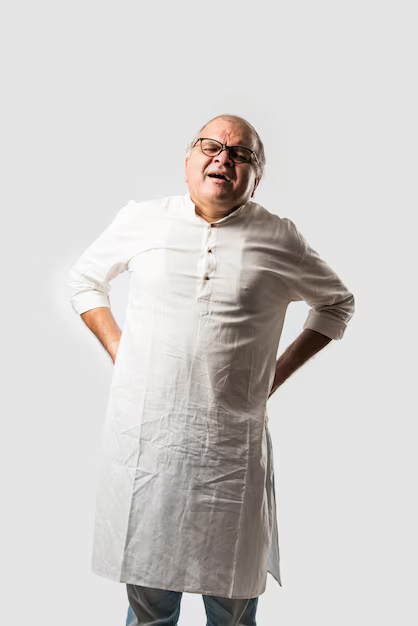
Sciatica and lumbar radiculopathy: radiating leg pain, numbness, or weakness from an irritated nerve root.
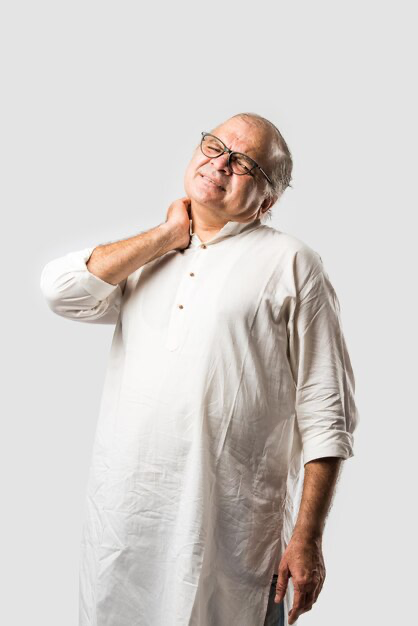
Cervical radiculopathy: arm pain, hand numbness, or weakness from a compressed neck nerve.
Herniated or slipped disc: a single disc pressing on one specific nerve.
Foraminal stenosis: narrowing of the nerve's exit channel, causing ongoing pressure on the nerve.
Pain after spine surgery: ongoing nerve-related pain that continues after an earlier operation.
Nerve pain after shingles: long-lasting pain that follows the path of a nerve.
Confirming the right level before surgery: when a scan shows problems at more than one level and doctors need to know exactly which one is causing your symptoms.
Am I a Good Candidate for a Nerve Root Block?
A nerve root block may be the right option if you have:
- Radiating arm or leg pain lasting more than 4 to 6 weeks, despite trying regular treatment
- A herniated disc or narrowed nerve channel at a specific level, confirmed on MRI
- Pain that follows a clear pattern down one nerve's path
- More than one problem area on your scan, where doctors need to confirm which level is actually symptomatic
- Pain that has not improved enough with physiotherapy, tablets, or oral steroids
- A wish to avoid or delay spine surgery, where your doctor agrees this is safe
It is generally not suitable if you have an active spine infection, a bleeding disorder or blood thinners that cannot be paused, are in the first trimester of pregnancy, are allergic to contrast dye or steroids, or have active cancer at the injection site. If you are diabetic, your blood sugar will need closer monitoring, since steroids can raise it for a few days.
The Nerve Root Block Procedure Step by Step
Before the procedure:
- The doctor reviews your history, medicines, and spine scans
- Stop NSAIDs and blood thinners 7 days before, only if your doctor tells you to
- Tell your doctor about any allergies, especially to iodine contrast dye, local anaesthetic, or steroids
- Diabetic patients should monitor their blood sugar closely
- Arrange transport if sedation is planned for your appointment
On the day of treatment:
- STEP 1Positioning. You lie face down, with a pillow under your stomach to open up the space between your spine bones.
- STEP 2Preparation. The skin over the target area is cleaned and numbed.
- STEP 3Live imaging. Real-time X-ray helps the doctor find the exact nerve opening.
- STEP 4Needle placement. The needle is guided carefully to the precise spot, watched continuously on the X-ray screen.
- STEP 5Confirming placement. A small amount of contrast dye confirms the needle tip is right next to the target nerve, before any medicine is given.
- STEP 6The injection. Local anaesthetic and steroid are slowly injected around the nerve.
- STEP 7Resting and going home. You rest for 20 to 30 minutes. How your pain responds in this first hour gives the doctor important diagnostic information. Most people go home the same day.
Recovery and Aftercare
A short-term rise in nerve symptoms, or soreness at the injection site, in the first 24 to 48 hours is normal. This happens as the anaesthetic wears off, before the steroid takes full effect. Avoid NSAIDs for 48 hours, avoid driving that day if you had sedation, and skip swimming, heavy exercise, and heat application for 48 hours. If you are diabetic, keep an eye on your blood sugar for 3 to 5 days.
| Time | What to Expect |
|---|---|
| Right after | Possible quick relief from the anaesthetic, this gives the diagnostic answer |
| First 24-48 hours | Anaesthetic wears off, symptoms may briefly return |
| Days 3-7 | Steroid effect starts to build, nerve pain may reduce |
| Weeks 1-4 | Symptoms improve, physiotherapy usually begins |
| Weeks 4-12 | Best therapeutic benefit, active rehabilitation continues |
| Months 3-6 | Meaningful relief for most patients who respond |
Get medical help right away if you develop a fever above 38 degrees Celsius, quickly worsening limb weakness, loss of bladder or bowel control, or severe, worsening pain at the injection site. These are rare but important warning signs.
Benefits, Risks, and Side Effects
Benefits of a nerve root block:
Pinpoint diagnosis: confirms the exact nerve causing your pain, something a scan alone cannot tell you
Targeted relief: anti-inflammatory medicine delivered right at the sensitive nerve
Image-guided accuracy: live X-ray with contrast confirmation at every session
No surgery: no cuts, no general anaesthesia, no hospital stay
Guides surgical planning: confirming the right nerve level lowers the risk of surgery at the wrong level
May help you avoid surgery: research shows a nerve root block combined with physiotherapy can lower the chance of needing surgery later
Risks and side effects:
Mild soreness or bruising, settles within 1 to 3 days
A brief worsening of symptoms as the anaesthetic wears off, usually resolves within 24 to 48 hours
Temporary steroid effects, such as facial flushing that fades within a day, or raised blood sugar in diabetics for 3 to 5 days
Temporary heaviness in the arm or leg from the anaesthetic, resolves within hours
Rare complications, such as infection, nerve irritation, bleeding, or allergic reaction, kept low with screening, sterile technique, and live imaging
Permanent nerve or spinal cord injury is extremely rare with an image-guided nerve root block done by an experienced specialist. Contrast confirmation is a key safety step that lowers the risk of an accidental injection into a blood vessel.
Nerve Root Block Cost in Jaipur
The cost of a nerve root block in Jaipur depends on the spinal level being treated, how many nerve roots are injected in one session, the steroid used, and whether X-ray guidance is included. Most patients need one to three sessions in total, which is worth keeping in mind when comparing a single-session price against the likely full course of treatment.
Results and Number of Sessions
A nerve root block gives you both an immediate diagnostic answer and ongoing therapeutic relief. Research shows a selective nerve root block gives significant pain relief in roughly 46 to 57 percent of patients at 6 to 12 months, with the best results in recent, single-level disc-related pain.
First hour: relief from the anaesthetic confirms the nerve
Days 3-7: first real improvement as the steroid takes effect
Weeks 4-12: strongest therapeutic benefit
3 to 6 months: typical length of relief for responders, some patients maintain benefit beyond a year with continued physiotherapy
Best Doctors for Nerve Root Block Treatment in Jaipur

Why Choose Nivaan Care for Nerve Root Block in Jaipur
| Nerve Root Block Care | Nivaan Care | Standalone Injection |
|---|---|---|
| Who performs it | Interventional pain specialist under live X-ray guidance | General practitioner or clinic |
| Diagnosis | Exact nerve level confirmed before and after treatment | Often based on symptoms only |
| Injection technique | X-ray guided with contrast confirmation every session | Often freehand or based on landmarks alone |
| Reading the response | Your first-hour response is carefully analysed to confirm the source | Often not formally checked |
| Rehabilitation | A personalised physiotherapy plan after treatment | Usually not included |
| Follow-up care | A structured, ongoing recovery plan | Rarely followed up |
Nivaan Care Clinics in Jaipur
Mansarovar Clinic Shipra Path, Mansarovar Sector 5, Mansarovar, Jaipur, Rajasthan 302020 Phone: +91 73587 02748
Lalkothi Clinic Plot No. 5, Sahakar Marg, near Rajasthan Vidhan Sabha, Vidyadhar Nagar, Lalkothi, Jaipur, Rajasthan 302007 Phone: +91 73587 03499
Choose the clinic that is easier for you to reach, and please book your appointment in advance. Both clinics have the same specialist, the same equipment, and the same treatment method.
Who Asks About Nerve Root Block Treatment in Jaipur, and Why
People in Jaipur ask about nerve root blocks for many reasons. Truck drivers and taxi drivers who spend long hours on the Jaipur-Delhi and Jaipur-Ajmer highways often develop sciatica from sitting for hours at a stretch. Labourers and loaders working in the city's wholesale markets, moving heavy goods by hand day after day, are another group prone to disc problems and radiating leg pain. Long two-wheeler commutes on uneven roads add ongoing strain to the lower back for many working people in the city as well.
For many patients, the appeal is also practical. A nerve root block does not need a hospital stay, and it often gives a clear answer in the first hour of treatment, rather than weeks of trial and error. This matters for people who cannot afford repeated time off work. It also matters for patients travelling to Jaipur from Ajmer, Sikar, Tonk, and other parts of Rajasthan, who want a treatment plan that does not require many separate trips.
Still, a nerve root block is not the right choice for everyone who asks. The real question is always the same. Does your pain genuinely follow the path of one specific nerve, and does a scan support that? That needs a proper, honest assessment, not a decision based on where the pain feels worst.
Frequently Asked Questions
It is a minimally invasive, X-ray guided injection of local anaesthetic and steroid, placed right at a specific nerve root as it exits your spine. It gives pain relief and also confirms whether that exact nerve is the true source of your pain.
An epidural spreads medicine over a wider area across several nerves and levels. A nerve root block targets just one specific nerve at one specific level, which makes it more precise for both treating the pain and confirming its source.
SNRB stands for Selective Nerve Root Block, the formal name for this treatment. The target nerve opening is found using live X-ray, the needle is guided to the nerve root, contrast dye confirms the exact position, and then anaesthetic and steroid are injected. The whole outpatient procedure usually takes 20 to 40 minutes.
Yes, when done with image guidance it has a well-established safety record. Side effects are usually mild and temporary. Serious complications are rare, and contrast confirmation further lowers that risk.
Yes, this is one of its most useful features. If your pain drops sharply right after the anaesthetic is injected at a specific level, that confirms that nerve root as the true source, which guides every treatment decision after.
For many patients, yes. Research shows that for disc-related pain, a nerve root block combined with structured physiotherapy can genuinely lower the chance of needing surgery. And if surgery does end up being needed, confirming the exact nerve level in advance makes that surgery more precise.
Yes. Nerve root block treatment is offered at both the Mansarovar and Lalkothi clinics in Jaipur, with the same specialist, imaging equipment, and treatment method at each location.
Often, yes, if your scan and symptoms confirm one specific nerve is irritated. Long hours of sitting can worsen disc-related pressure on a lumbar nerve root. Your specialist will confirm this on imaging before recommending treatment, and will also guide you on posture and break habits that help protect the nerve going forward.