

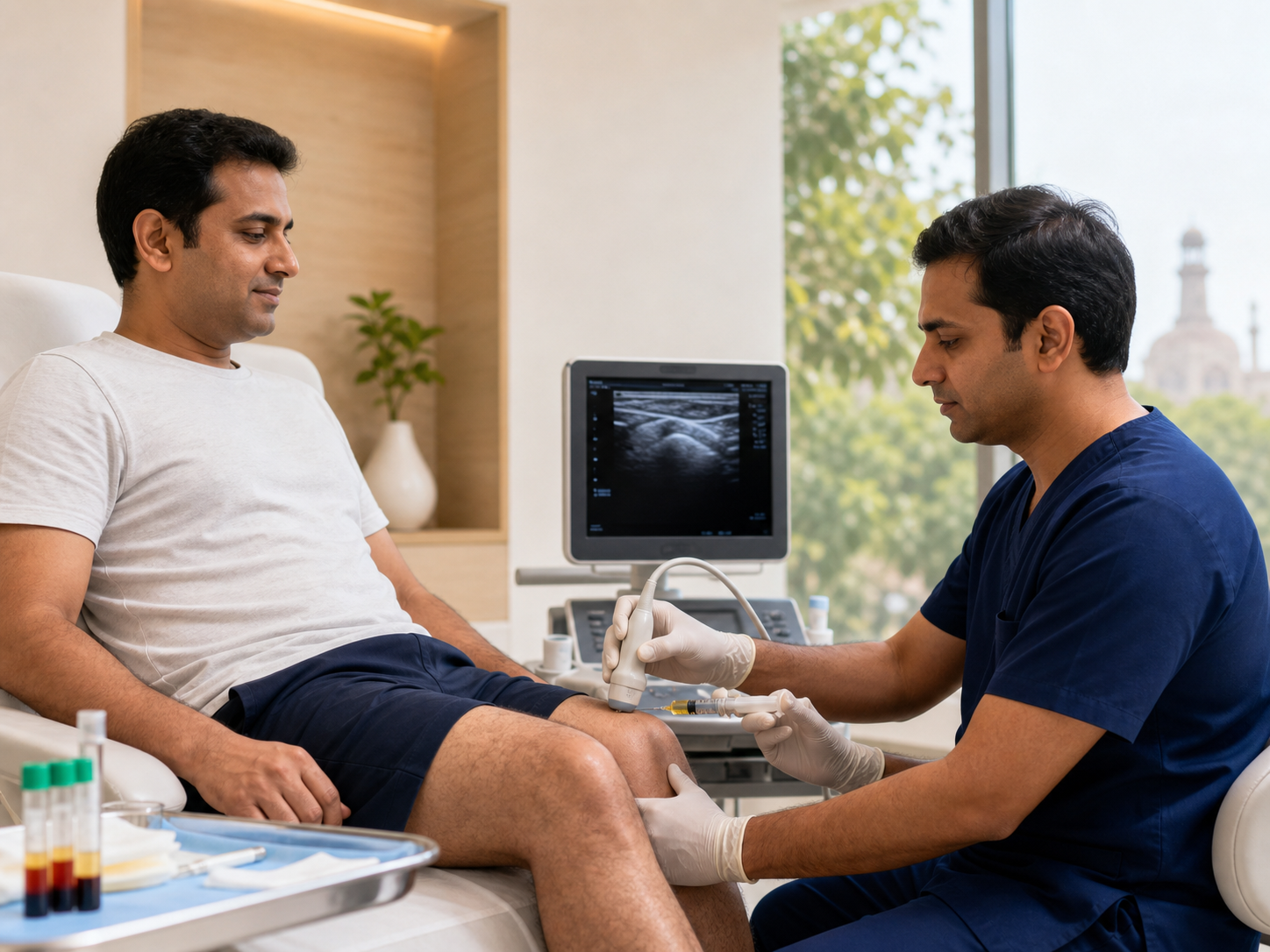
The doctor takes a small blood sample from your arm, just like a normal blood test
What Is PRP Treatment?
PRP stands for Platelet-Rich Plasma. It is a type of regenerative therapy made from your own blood. First, the doctor takes a small amount of blood from your arm, just like a normal blood test. Then a machine spins the blood at high speed to separate out the platelets. Platelets are the natural cells your body uses to start healing after an injury. The doctor then injects this platelet-rich liquid into the injured area. Ultrasound or X-ray guidance is used to get the needle to the exact spot.
Because PRP is made from your own blood, your body will not reject it. There is also no risk of getting a disease from someone else's blood. Painkillers and steroid injections only hide the pain for a short time. PRP is different. It gives your body's own healing process a boost right where it is needed. This is why it is a good choice for people who want to avoid or delay surgery, when the doctor agrees it is safe.
Here is what happens, in simple steps:
A machine spins the blood and separates out the platelets
The doctor injects the platelet-rich liquid into the painful joint or tissue, using ultrasound or X-ray guidance
Since it is your own blood, side effects are very rare
What Happens After the Injection?
After the injection, the platelets release growth factors right at the injured spot. They do three main things. They lower swelling and inflammation. They help new collagen form, which rebuilds tendons, ligaments, and cartilage. And they improve blood flow to the area, bringing more oxygen and nutrients to help the tissue heal. PRP does not just block the pain for a few hours. It helps your body heal the real problem.
It is important to be honest about joint pain like osteoarthritis. In these cases, PRP mainly lowers pain and helps you move better in daily life. If the problem is found early, it may also slow it down. But PRP does not grow back lost cartilage. It does not cure arthritis. And it cannot replace surgery if the joint is already badly damaged. It is better to know this clearly from the start.
PRP vs GFC: Which One Is Right for You?
Many people ask how PRP is different from GFC (Growth Factor Concentrate). Both come from your own blood. But there is a key difference. PRP keeps the platelets along with some red and white blood cells. GFC removes most of these cells and keeps only a stronger, purer dose of growth factors. PRP has more research behind it, including studies that compare it directly with other injections. One is not always better than the other. The right choice depends on your problem. Your doctor will tell you which one suits your condition.
Conditions Treated with PRP in Jaipur
PRP can help with many joint, spine, and soft-tissue problems. It is most useful when normal treatment has not given lasting relief:

Knee: early to moderate osteoarthritis, worn cartilage, ligament and tendon strain, meniscus wear.
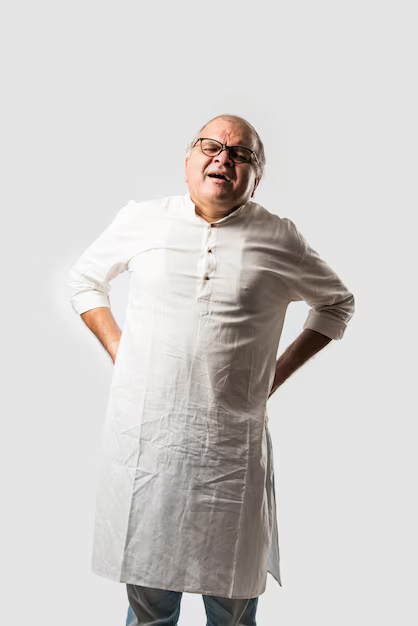
Back: disc wear and tear, facet joint pain, sacroiliac joint pain, ligament injury in the lower spine.
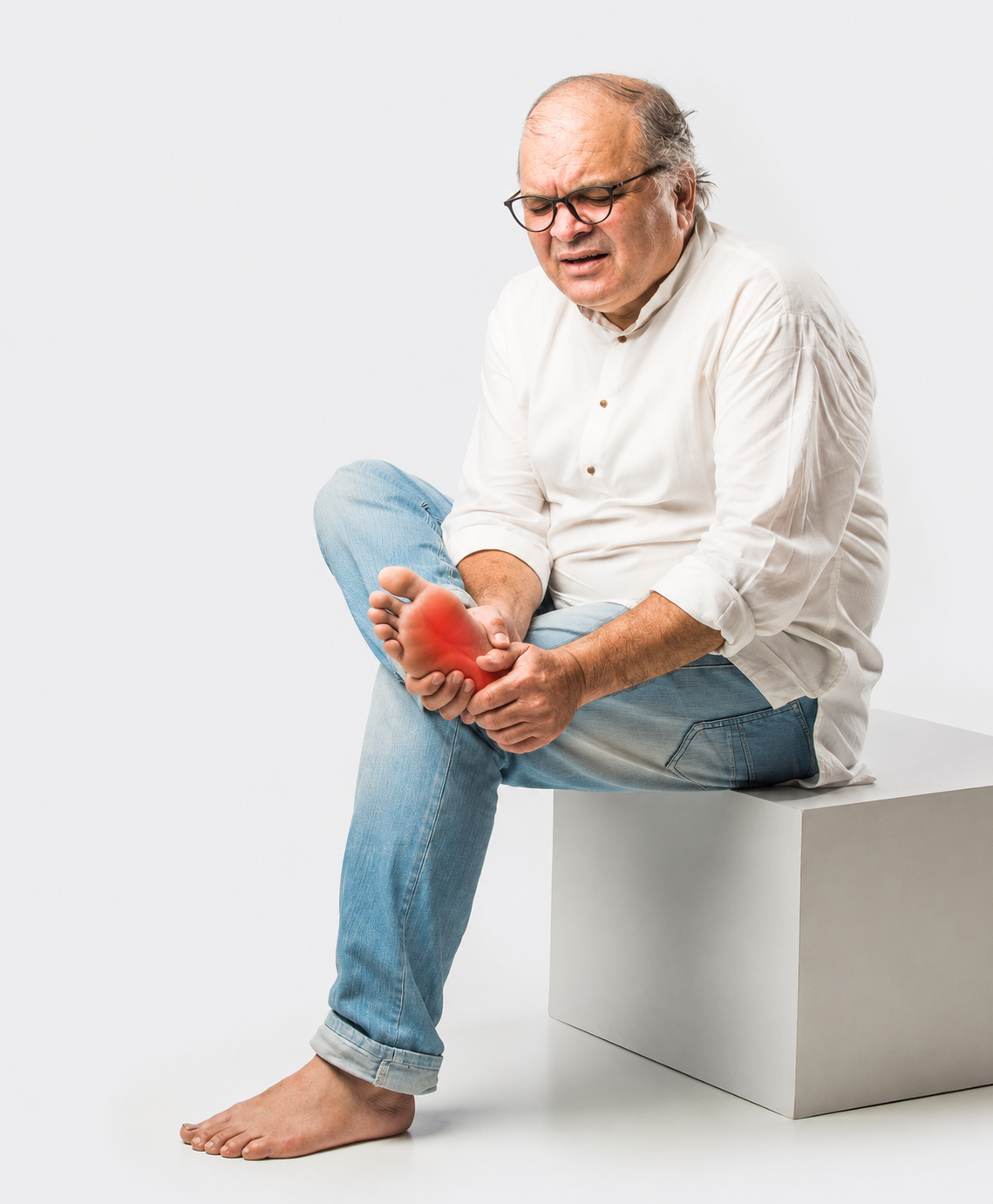
Wrist and hand: tendon pain from repeated hand movements, common in racquet sports and in the repeated hand work of Jaipur's jewellery and handicraft trades.
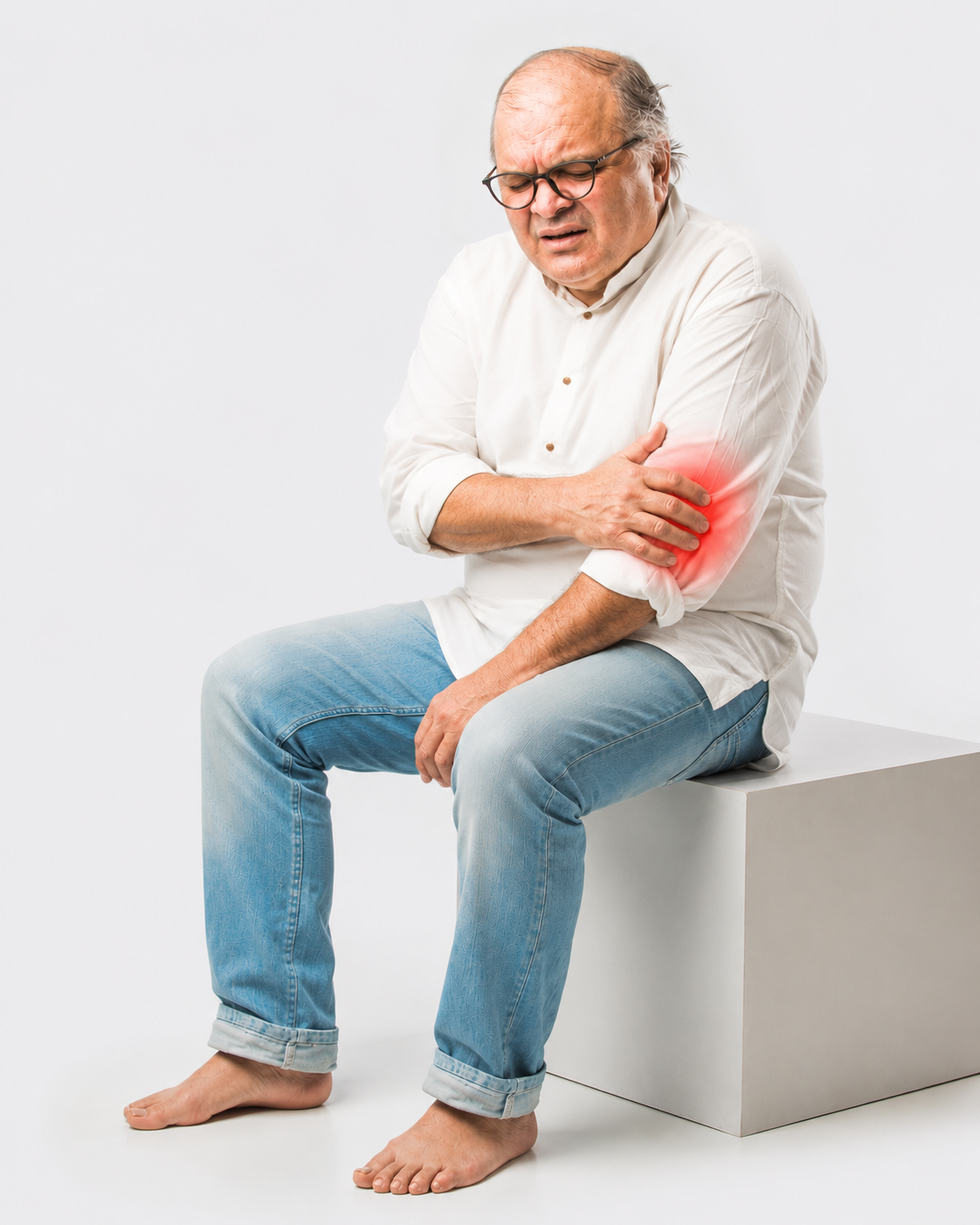
Elbow: tennis elbow, golfer's elbow, and tendon pain from overuse.
A doctor's check-up is the best way to know if PRP is right for your problem. It is not something you should decide on your own from a symptom list.
Is PRP Right for You?
PRP may be a good fit if:
- You have early to moderate joint wear, where some healthy tissue is still left.
- Your pain has not gone away with physiotherapy and medicine.
- You have a slow-healing tendon or ligament injury that is not getting better on its own.
- You want to avoid or delay surgery, and the doctor agrees this is safe.
- You cannot take long-term painkillers or steroid tablets due to side effects.
PRP is not the best choice for advanced arthritis with severe damage. It is also not right for constant, disabling pain, where surgery would give better and longer relief. Choosing the right patient is very important. This is why a Nivaan specialist will suggest PRP only when it has a real chance of helping you. They will not suggest it just because it sounds new.
The PRP Procedure Step by Step
The treatment is simple and minimally invasive. It is usually done in one outpatient visit.
Before the procedure:
- The doctor checks your medical history and looks at the painful area
- You may need an X-ray, MRI, or ultrasound scan to confirm the exact problem
- Stop anti-inflammatory painkillers 7 to 14 days before treatment, only if the doctor tells you to
- Avoid steroid injections in the same spot for 4 to 6 weeks before PRP
- Eat and drink normally on the day, and stay well hydrated
On the day of treatment:
- STEP 1Blood test. The doctor takes a small blood sample from your arm, just like a normal blood test.
- STEP 2Spinning the sample. The blood goes into a machine that spins it to separate the platelet-rich layer.
- STEP 3Preparing the area. The treatment area is cleaned. A local anaesthetic is used to numb it if needed.
- STEP 4The injection. The PRP is injected into the painful joint or tissue. Ultrasound or X-ray guides the needle for accuracy.
- STEP 5Go home the same day. The whole process is done in one visit. Most people go home the same day with no hospital stay.
Recovery and Aftercare
You may feel mild soreness, swelling, or warmth near the injection for a day or two. This is normal. It is a sign that healing has started, and it goes away on its own. Avoid anti-inflammatory painkillers for 4 to 6 weeks after the injection, since they can block the healing response PRP is designed to trigger.
| Time | What to Expect |
|---|---|
| Right after | Mild soreness or warmth where the injection was given |
| Days 1-3 | The soreness gets better and you can start light activity |
| Weeks 2-6 | You notice the first signs of improvement |
| Weeks 4-12 | The tissue keeps healing, physiotherapy often starts here |
| Months 3-6 | Most people feel meaningful improvement |
| Months 6-24 and beyond | Results usually hold, a repeat injection may be considered if needed |
Your doctor may add a physiotherapy plan to help you get the best result. PRP repairs the tissue, and physiotherapy builds the strength around it so the improvement lasts. This is very helpful if your work keeps you on your feet or at a work bench for long hours, like many jobs in Jaipur.
Benefits, Risks, and Side Effects
Benefits of PRP treatment:
Safe and natural: it uses your own blood, so the risk of a reaction is very low.
No surgery: no cuts, no stitches, and no hospital stay.
Treats the cause: it helps real healing, not just hides the pain.
Quick recovery: most people return to light activity within 24 to 48 hours.
Backed by research: a 2021 study in the British Journal of Sports Medicine found PRP gave better pain relief than hyaluronic acid injections for knee osteoarthritis, at both 6 and 12 months.
May avoid surgery: it is a good first step to try before more invasive options.
Risks and side effects:
PRP has very few risks because it is made from your own blood. There is no risk of rejection or disease from another person. The side effects are mild and short:
Mild pain, swelling, or bruising at the site, usually gone in 1-3 days
Short warmth or stiffness near the treated area
A short rise in pain as healing starts, this is expected and not a bad sign
Short-term nerve irritation if the injection is close to a nerve
Infection, which is rare and kept very low by clean, image-guided technique
No general anaesthesia is needed. Serious problems are rare.
Results and Number of Sessions
PRP works slowly, not overnight. Healing takes time and builds up over weeks and months.
Weeks 2-6: first signs of improvement.
Weeks 4-12: real pain relief and better movement.
3 to 6 months: the full benefit settles in.
Sessions: most people need 1 to 3 sessions, given 4 to 6 weeks apart.
Results are different for each person. Tendon injuries like rotator cuff, wrist, and tennis elbow often respond well when the damage is in one clear spot. Joint problems respond best when found early to moderate, while there is still healthy tissue to work with.
PRP Treatment Cost in Jaipur
The cost of PRP treatment in Jaipur depends on a few things. It depends on the joint or area being treated, the number of sessions you need, and the clinic. When you compare clinics, do not look at the price alone. Check what is included in that price. A good plan covers the first check-up, the image-guided injection, and the follow-up physiotherapy. All of these affect your safety and your results. Not every clinic includes them. Always ask what the price covers before you compare two numbers.
Best Doctors for PRP Treatment in Jaipur

Why Choose Nivaan Care in Jaipur
PRP treatment at Nivaan Care works best as part of a full, expert-led plan. It is not just a single injection. The table below shows the difference:
| PRP Pain Care | Nivaan Care | Other Clinics |
|---|---|---|
| Who gives the injection | An interventional pain specialist, using live ultrasound or X-ray | Often a general doctor or clinic, many times without imaging |
| Finding the cause | The exact cause of pain is found before the injection | Treated from the symptom only |
| After the injection | A physiotherapy plan made for you, included in the treatment | Usually left for you to arrange |
| Emotional support | A counsellor to help with sleep, stress, and fear | Not part of the service |
| Full care | One team that works together | A single injection on its own |
| Follow-up | A clear recovery plan, checked over months | Rarely followed up |
Nivaan Care Clinics in Jaipur
Mansarovar Clinic Shipra Path, Mansarovar Sector 5, Mansarovar, Jaipur, Rajasthan 302020 Phone: +91 73587 02748
Lalkothi Clinic Plot No. 5, Sahakar Marg, near Rajasthan Vidhan Sabha, Vidyadhar Nagar, Lalkothi, Jaipur, Rajasthan 302007 Phone: +91 73587 03499
Choose the clinic that is easier for you to reach, and please book your appointment in advance. Both clinics have the same specialist, the same equipment, and the same treatment method.
Who Asks About PRP in Jaipur, and Why
People in Jaipur ask about PRP for many reasons. The city has many jewellery, gem-cutting, and handicraft workers. Their jobs need years of small, repeated hand and wrist work. This often causes tendon pain that painkillers cannot fix. Long rides on two-wheelers add to knee and back pain. And more people now run, cycle, and go to the gym, which brings knee and shoulder problems too.
For many families, the reason is also practical. PRP does not need a long hospital stay or many weeks away from work. This matters for people in the city. It also matters for patients who travel to Jaipur from Ajmer, Sikar, Tonk, and other parts of Rajasthan. They often want a treatment that does not keep them far from home for long.
Still, PRP is not the answer for everyone who asks. The real question is simple. Is it right for your problem? That needs an honest, personal check-up, not a yes to everyone just because it sounds easier than surgery.
Frequently Asked Questions
PRP uses your body's own platelets and growth factors, injected into the damaged area to help it heal. A steroid injection only lowers swelling for a short time. It does not help healing, and repeated use can weaken tissue. PRP works on the real problem. A steroid only hides the symptom.
Most people need 1 to 3 sessions, given 4 to 6 weeks apart. Your doctor checks your progress after each session and suggests another one only if there is a medical reason. It is not sold as a fixed package.
Anti-inflammatory painkillers like ibuprofen block the healing response that PRP is designed to trigger. Taking them before or after the injection can make the treatment less effective. Paracetamol is fine for discomfort if you need it.
Yes. It is offered at both the Mansarovar and Lalkothi clinics. Both use the same specialist, the same equipment, and the same method. You can choose the one that is easier to reach.
Yes, and it usually should be. PRP repairs the tissue, physiotherapy builds the strength and movement pattern that protects it. At Nivaan, a physiotherapy plan is part of every PRP treatment, not something extra you have to arrange yourself.
PRP keeps the platelets along with some blood cells and has a wider base of research behind it. GFC removes most of those cells and keeps a purer, more concentrated dose of growth factors. But the better choice depends on your condition, not on which name sounds newer. Your doctor will suggest the right one for you.