

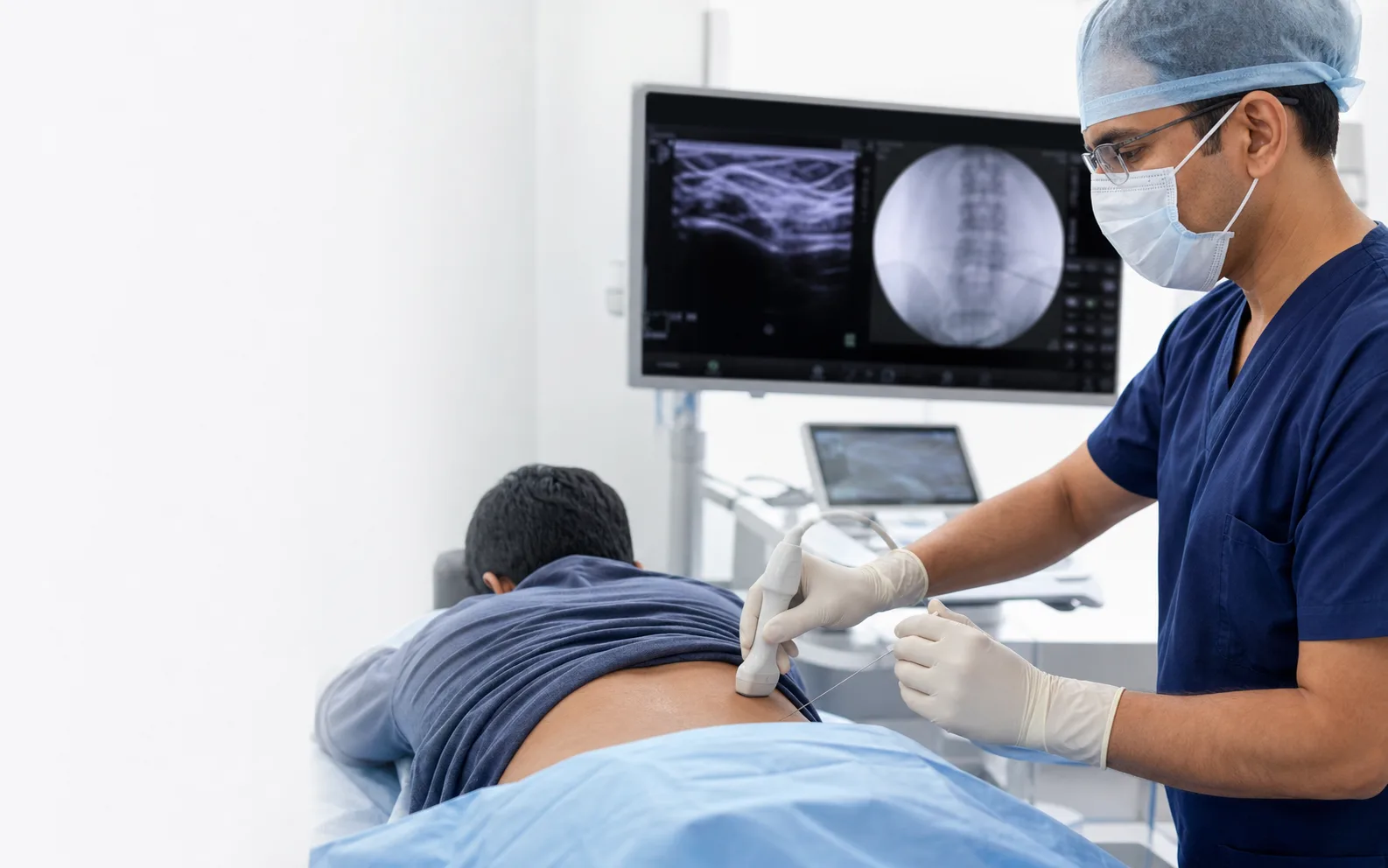
Chemical neurolysis uses agents such as alcohol or phenol.
What Is Neurolysis?
Neurolysis is a specialist pain procedure that deliberately interrupts a confirmed pain-carrying nerve. It can be done using a chemical agent, controlled heat from radiofrequency energy, or controlled cold, called cryotherapy. At Nivaan, neurolysis is only considered after the pain source has been carefully checked, and where needed, confirmed first with a temporary test injection.
It helps to be precise about what neurolysis actually covers. Chemical neurolysis is most established for certain cancer-related deep, internal pain. Radiofrequency neurolysis is used for carefully confirmed facet-joint pain and selected nerve pain. It is not a general treatment for every kind of long-term pain.
Here is what happens, in simple steps:
- Confirmed target: an exam, scans, and test injections find the exact pain pathway before treatment
- Technique matched to diagnosis: chemical, heat, or cold is chosen based on the nerve and condition
- Interrupting the pain signal: the chosen nerve pathway is disrupted to reduce pain transmission
- Image-guided precision: X-ray or ultrasound helps protect nearby structures during the procedure
How Does Neurolysis Work?
A neurolysis procedure deliberately reduces the ability of a chosen nerve to carry pain signals.
Radiofrequency neurolysis creates a small, controlled area of heat at the nerve.
Cryoneurolysis uses carefully controlled cold.
Nearby nerves often control movement, feeling, or organ function too, which is exactly why choosing the right target and using image guidance matters so much. A temporary test injection with local anaesthetic usually comes first. This predicts how much benefit you are likely to get and reveals any unwanted effects, before a longer-lasting procedure is considered.
Conditions Considered for Neurolysis in Jaipur
Neurolysis is kept for selected pain conditions, where one specific nerve or nerve group can be clearly targeted:

Cancer-related deep, internal pain: selected coeliac, hypogastric, or other nerve pathways, after a specialist assessment. This is the most established, well-researched use.
Confirmed facet-joint pain: radiofrequency neurolysis, done after a test injection has clearly confirmed the joint as the pain source.
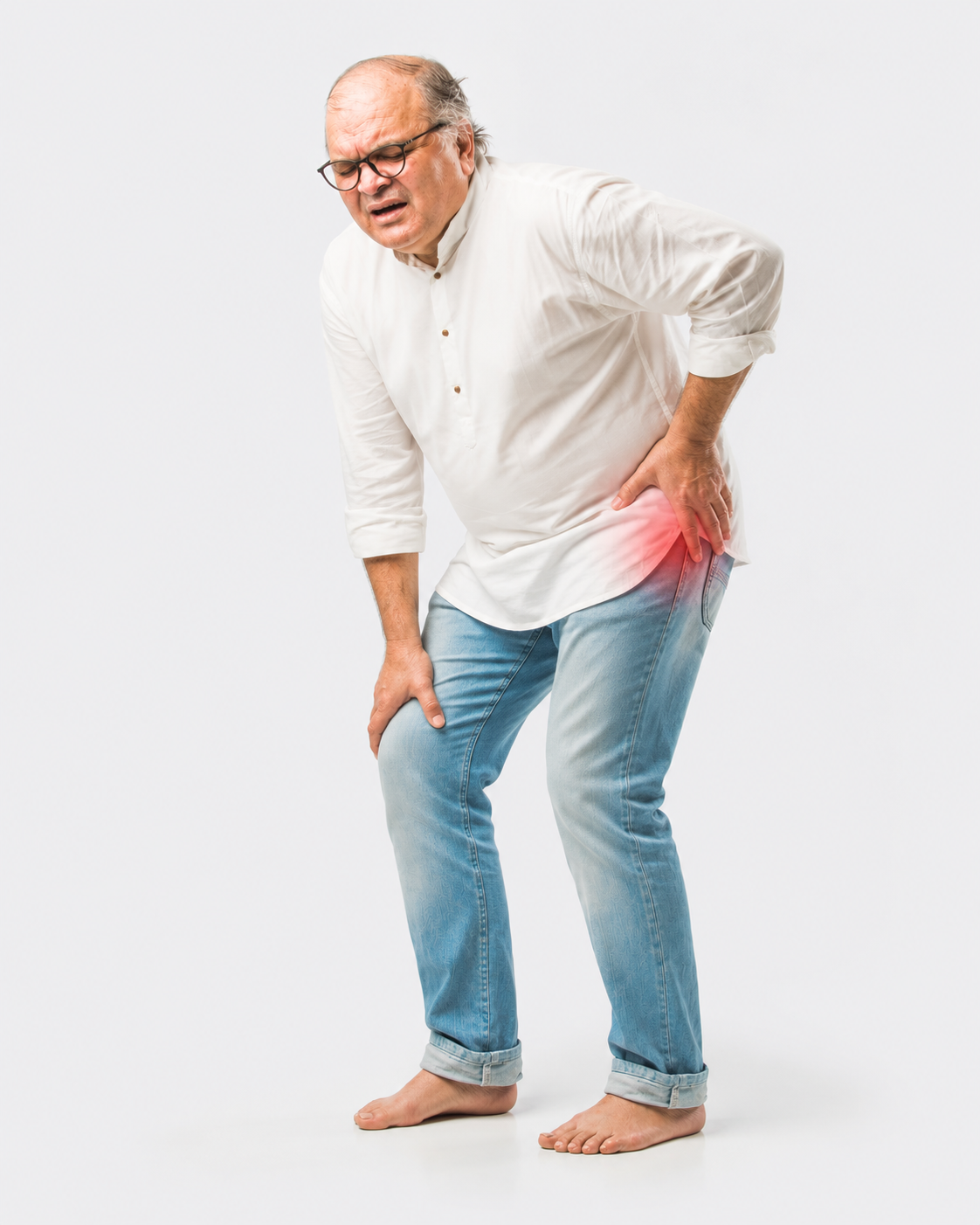
Selected pelvic or perineal pain: specific nerve or nerve-cluster targets, where the evidence and diagnosis support treatment.

Selected peripheral nerve pain: carefully diagnosed pain involving one clear, targetable nerve.
How well neurolysis is likely to work, and whether it is suitable at all, varies a great deal by condition. It is only recommended when the expected benefit genuinely outweighs the risks.
Am I a Good Candidate for Neurolysis?
Neurolysis may be considered when:
- Your pain remains disabling despite proper medicine and conservative treatment
- The pain can be clearly linked to one specific nerve, nerve branch, or nerve cluster
- A temporary test injection gave you meaningful relief, without any unacceptable loss of function
- You understand the relief may be temporary, and the treatment does not cure the underlying disease
It is generally avoided when the exact nerve target is unclear, when there is infection or a high bleeding risk, or when losing the nerve's other functions could cause real harm.
The Neurolysis Procedure Step by Step
Before the procedure:
- The doctor reviews your diagnosis, scans, medicines, allergies, and bleeding risk
- Your response to a prior test injection is confirmed, where clinically needed
- Blood-thinning medicine is paused only on clear medical advice
- Your doctor discusses expected changes in sensation, how long relief may last, other options, and risks specific to your target nerve
- Transport is arranged if sedation is planned
On the day of treatment:
- STEP 1Positioning. You are placed so the target nerve or nerve cluster can be reached safely.
- STEP 2Preparation. The skin is cleaned, and local anaesthetic is used for comfort.
- STEP 3Image-guided placement. A fine needle or probe is guided in under live X-ray or ultrasound.
- STEP 4Confirming the position. Contrast dye, a stimulation test, or a small test dose may confirm the exact position before treatment.
- STEP 5Neurolysis. The chosen chemical, heat, or cold technique is applied to the confirmed nerve.
- STEP 6Observation. Your strength, sensation, pain response, and vital signs are checked before you go home.
Recovery and Aftercare
Some temporary soreness, numbness, or a short pain flare can happen. Your specific, target-based instructions always come first, since recovery looks different depending on whether a spinal, plexus, or peripheral nerve was treated.
| Time | What to Expect |
|---|---|
| Right after | Your pain response, strength, sensation, and vital signs are checked |
| First 24-48 hours | Soreness at the site or temporary numbness may occur |
| Days 3-14 | The real treatment effect becomes clearer as initial irritation settles |
| Following months | Relief is reviewed, nerves may slowly recover and symptoms can return |
Rehabilitation, medicine, cancer care, or other treatment continues based on your underlying diagnosis, with physiotherapy built into your plan where it applies.
Benefits, Risks, and Side Effects
Benefits of neurolysis:
Targeted: treats one confirmed pain pathway, rather than exposing your whole body to more medicine
Longer relief: can last longer than a temporary local-anaesthetic nerve block
Fewer tablets: may lower how much you rely on daily painkillers, in the right patients
Supports daily function: less pain can support better movement, sleep, rehabilitation, or comfort in palliative care
Risks and side effects:
Pain flare or nerve irritation, burning, tingling, or increased pain as the treated nerve responds
Numbness or weakness, if nearby nerve fibres are affected
Bleeding or infection, uncommon, reduced with screening and sterile technique
Injury to nearby structures, nerve, vessel, organ, or spine, uncommon but a genuine risk specific to the target area
Incomplete or short-lived relief, pain may only partly improve, or return as nerves regrow or disease progresses
Neurolysis Cost in Jaipur
The cost of neurolysis in Jaipur varies a lot depending on the nerve or nerve cluster targeted, the technique used, chemical, radiofrequency, or cryoneurolysis, and whether a prior test injection is needed. For cancer-related neurolysis specifically, this is often considered alongside your broader cancer treatment costs, worth discussing openly with your care team as part of your overall treatment plan.
Results and How Long Relief Lasts
Results vary widely, based on the nerve target, technique, and underlying condition.
Early response: relief may begin once initial soreness settles
Following weeks: your function, medicine use, sleep, and pain levels are reviewed together
Several months: most neurolytic treatments aim to give relief over months, not a permanent cure
Structured review: further treatment depends on how you respond and how the underlying condition progresses
For cancer-related neurolysis, the goal is often meaningful pain relief and lower medicine use, as part of a broader palliative care plan.
Best Doctors for Neurolysis Treatment in Jaipur

Why Choose Nivaan Care for Neurolysis in Jaipur
Neurolysis at Nivaan sits inside a complete, specialist-led plan, not a standalone procedure. An interventional pain specialist confirms the exact diagnosis, a physiotherapist builds a personal rehabilitation plan, and a pain counsellor supports the fear and stress that come with long-term pain, particularly relevant when the underlying condition is cancer.
Nivaan Care Clinics in Jaipur
Mansarovar Clinic Shipra Path, Mansarovar Sector 5, Mansarovar, Jaipur, Rajasthan 302020 Phone: +91 73587 02748
Lalkothi Clinic Plot No. 5, Sahakar Marg, near Rajasthan Vidhan Sabha, Vidyadhar Nagar, Lalkothi, Jaipur, Rajasthan 302007 Phone: +91 73587 03499
Choose the clinic that is easier for you to reach, and please book your appointment in advance. Both clinics have the same specialist, the same equipment, and the same treatment method.
Who Asks About Neurolysis in Jaipur, and Why
People in Jaipur ask about neurolysis for a specific reason. Jaipur is home to some of Rajasthan's largest cancer treatment centres, and patients travel here from across the state for oncology care. For many of these patients, deep, internal pain from advanced cancer does not respond well to tablets alone, and neurolysis becomes a genuine option to discuss with the oncology and pain teams together. Patients with confirmed, long-standing facet-joint pain that has not settled with other treatments make up the other main group asking about this procedure.
For families managing cancer care from outside the city, the appeal is also practical. Neurolysis does not need a long hospital stay, and its effects can last for months, which matters when travelling repeatedly to Jaipur from Ajmer, Sikar, Tonk, or elsewhere in Rajasthan is genuinely difficult.
Still, neurolysis is not the right choice for everyone who asks. The real question is always the same. Has your pain genuinely been traced to one confirmed nerve pathway, with a real chance that treating it will help? That needs a careful, honest assessment, not a decision made from pain and hope alone.
Frequently Asked Questions
It is a specialist pain procedure that deliberately interrupts a chosen pain-carrying nerve, using a chemical agent, controlled heat, or controlled cold. The exact technique and nerve target depend entirely on your diagnosis.
No. A diagnostic nerve block uses local anaesthetic and is temporary, it is a test. Neurolysis is only considered once the pain source has been carefully confirmed, and is meant to give longer-lasting relief.
It is most established for carefully selected cancer-related deep, internal pain. Radiofrequency neurolysis may also be used for confirmed facet-joint pain or selected nerve pain elsewhere in the body.
It depends on the technique, the nerve target, and your underlying condition, often several months. Nerves can slowly regrow, and pain may return over time.
Not necessarily. Nerve fibres can regrow, and the underlying condition may progress. It is planned as part of ongoing specialist care, not offered as a guaranteed, one-time cure.
Often, yes, if the pain is genuinely linked to a nerve or nerve cluster that can be safely targeted. Your Nivaan specialist will coordinate closely with your existing oncology team, since neurolysis for cancer pain works best as part of your overall care plan, not as a separate, disconnected treatment.
Yes. Neurolysis is offered at both the Mansarovar and Lalkothi clinics in Jaipur, as part of our non-surgical, interventional pain management approach, including for cancer-related pain.