




Nivaan Logo

Vertebroplasty Surgery in Delhi | Vertebral Fracture Stabilisation

A minimally invasive image-guided procedure that injects bone cement directly into a fractured vertebra to stabilise it and reduce pain.
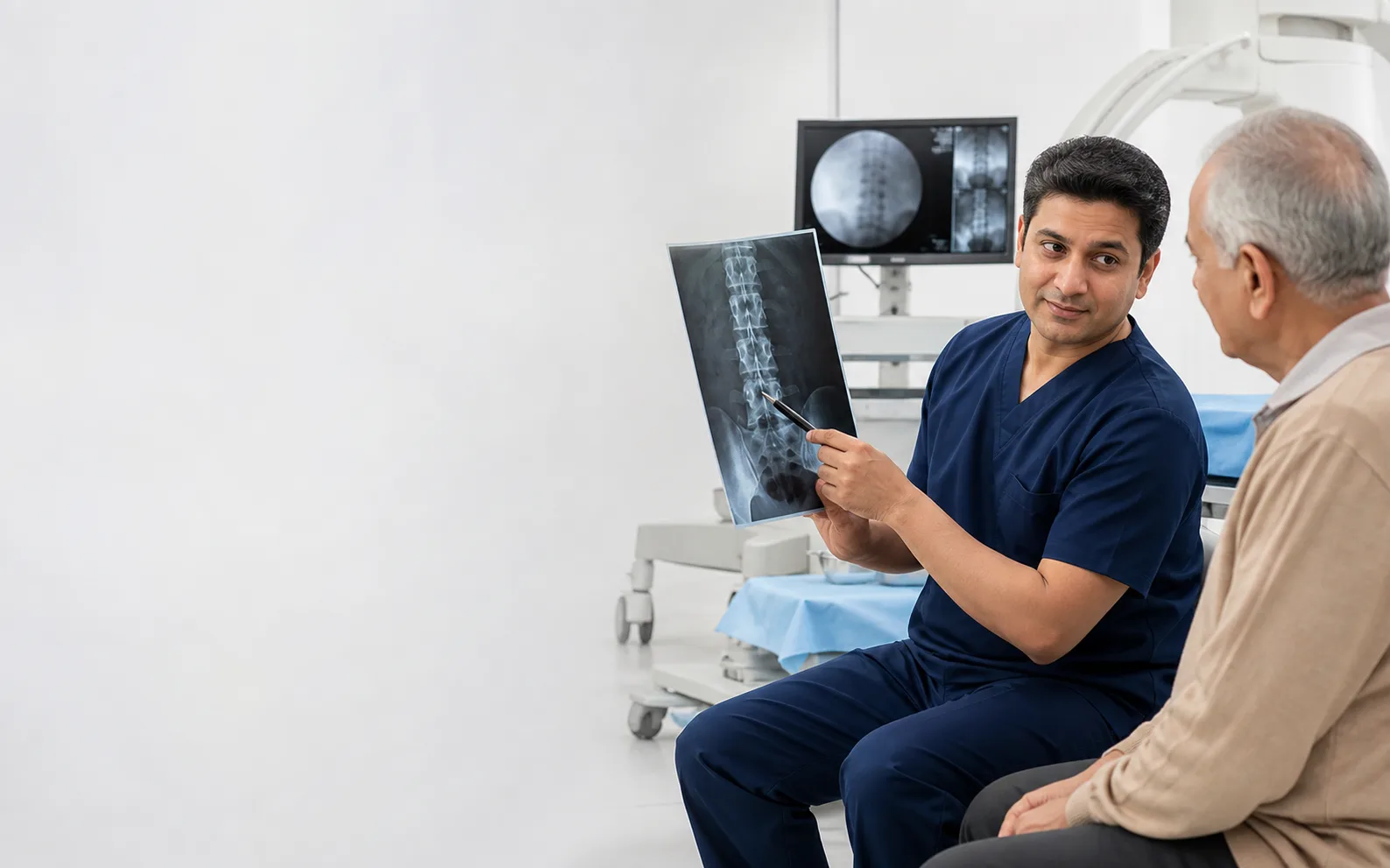
Vertebroplasty procedure for a vertebral compression fracture

0

patients treated

0

advanced non-surgical procedures

0

years of combined expertise

Treatment Overview

Vertebroplasty Surgery at Nivaan

Vertebroplasty is a minimally invasive, image-guided procedure that treats a fractured or collapsed vertebra by injecting medical-grade bone cement directly into the broken bone, stabilising it and relieving pain. At Nivaan, an accurate diagnosis always comes first, confirming the fracture, its cause, and whether it's genuinely appropriate for vertebroplasty, before recommending any procedure. If you're comparing options for vertebroplasty surgery in Delhi, this page walks through exactly what to expect.

Treatment Guide

What Is Vertebroplasty?

Vertebroplasty treats a vertebral compression fracture, a crack or collapse in one of the bones of the spine, most often caused by osteoporosis, though trauma and certain cancers can also weaken the vertebra enough to fracture.

Treatment Guide

Vertebroplasty vs. Kyphoplasty

These two procedures are frequently confused, and getting the distinction right matters:

  • Vertebroplasty injects bone cement directly into the fractured vertebra, without a balloon, aiming primarily to stabilise the fracture and relieve pain.
  • Kyphoplasty first inflates a balloon inside the fractured vertebra to create space and attempt to restore some lost height, then fills that cavity with cement.

Neither is simply "better" than the other; the right choice depends on your specific fracture, its shape, and your goals. Learn more about kyphoplasty at Nivaan if height restoration is a specific consideration for your fracture.

Treatment Guide

Causes of a Fractured Vertebra

A collapsed or compressed vertebra most often results from:

  • Osteoporosis, weakening bone density, particularly in older adults, and by far the most common cause of vertebral compression fractures
  • Trauma, such as a fall or accident
  • Cancer or other conditions that weaken bone, including multiple myeloma, kidney disease, lymphoma, and metastatic cancer affecting the spine
  • Long-term steroid use, which can weaken bone over time
Treatment Guide

Symptoms and Diagnosis

A fractured vertebra typically causes sudden, severe back pain, often worse with standing, sitting, or movement, along with reduced mobility and, over time, potential loss of height or a stooped posture if multiple fractures occur. Diagnosis involves a physical exam alongside imaging:

  • X-ray, to identify the fracture
  • MRI or CT scan, for a more detailed view of the vertebra and surrounding structures
  • Bone density (DEXA) scan, to assess for underlying osteoporosis

Retropulsion is an important finding your specialist checks for on imaging, this refers to a fragment of bone displaced backward into the spinal canal. Significant retropulsion can affect whether vertebroplasty is appropriate, since it raises the risk of nerve or spinal cord involvement, and may point toward a different treatment approach entirely.

Treatment Guide

Who Is a Candidate for Vertebroplasty?

Candidacy depends on your specific fracture, not just your symptoms. Vertebroplasty may be appropriate if you have:

  • A confirmed vertebral compression fracture on imaging
  • Significant pain that has lasted at least several weeks (commonly two months or more) and hasn't responded to conservative treatment (rest, pain medication, bracing, physical therapy)
  • A fracture without significant retropulsion or neurological compromise

Vertebroplasty is generally not suitable for:

  • Active spinal infection
  • A fracture where imaging shows significant retropulsion into the spinal canal
  • Uncontrolled bleeding disorders
  • Allergy to bone cement or contrast material used during imaging
  • Cases better suited to kyphoplasty or a different approach, based on fracture shape and severity
Nivaan Specialists

Specialists for Vertebroplasty Assessment in Delhi

Nivaan's interventional pain specialists confirm the fracture and coordinate the appropriate procedure or specialist referral, with clear disclosure of who will perform it.
Treatment Overview

Vertebral Compression Fracture Treatment in Elderly Patients

Compression fracture treatment in elderly patients requires particular care, since osteoporosis, multiple existing fractures, and other health conditions are more common in this group. Vertebroplasty is commonly and safely performed in older adults, but a full evaluation of bone health and overall medical status is essential, alongside a plan to manage the underlying osteoporosis itself, since vertebroplasty treats the fracture, not the bone-weakening condition that caused it.

Treatment Guide

Preparation: Before the Procedure

Preparing for vertebroplasty surgery in Delhi, or anywhere else, follows a similar pattern. Before vertebroplasty, your specialist will:

  • Confirm the fracture, its cause, and check for retropulsion through imaging
  • Review your medical history, medications, and bleeding risk
  • Advise pausing certain blood thinners, if appropriate (only on medical advice)
  • Ask you to avoid eating for several hours beforehand
  • Arrange for someone to drive you home afterward
Treatment Guide

What Is the Vertebroplasty Procedure?

The vertebroplasty procedure is minimally invasive and typically completed as a day-care visit, often taking about an hour per vertebra treated:

  1. 1Positioning: you lie face-down, and the treatment area is cleaned
  2. 2Anaesthesia: local anaesthesia with sedation is commonly used; general anaesthesia is an option in select cases, depending on your specific situation, not a fixed default
  3. 3Guided access: under fluoroscopic (X-ray) image guidance, a needle is carefully positioned into the fractured vertebra, this vertebroplasty radiology guidance is what allows the specialist to confirm exact, safe placement in real time
  4. 4Cement injection: medical-grade bone cement is slowly injected into the vertebra, sometimes with a second injection to fill it fully
  5. 5Completion: the needle is withdrawn, pressure is applied, and a sterile bandage is placed over the small entry point
Treatment Guide

Recovery After Vertebroplasty Surgery

Recovery timelines for vertebroplasty surgery in Delhi and elsewhere follow a similar pattern:

  • First 24 hours: rest is advised, generally lying on your back for a couple of hours while the cement hardens, followed by a short observation period
  • First few days: mild soreness at the injection site is common; ice can help, and over-the-counter pain relief may be used as advised
  • First 6 weeks: avoid heavy lifting and strenuous activity
  • Ongoing: some patients benefit from a physiotherapy program to support spinal muscle strength, though not everyone needs formal rehabilitation after vertebroplasty specifically, your specialist will advise based on your recovery

Pain relief timing varies: some people feel improvement almost immediately, while for others it takes several days.

Treatment Guide

Vertebroplasty Surgery Side Effects and Risks

Anyone weighing vertebroplasty surgery in Delhi deserves a plain-spoken risk conversation, not just a benefits list. Vertebroplasty has a favourable safety profile, but like any procedure, it isn't risk-free, and we'd rather be upfront about that than understate it. Risks include:

  • Mild soreness or bruising at the injection site
  • Infection, uncommon, and typically treatable if it occurs
  • Bleeding, uncommon but a genuine risk of any needle-based procedure, not something that can be ruled out entirely
  • Cement leakage beyond the vertebra, usually without symptoms, though rarely it can affect a nearby nerve
  • Allergic reaction to the bone cement or imaging contrast
  • Rare, more serious complications: nerve or spinal cord injury, or cement entering a blood vessel

Serious complications are uncommon but not impossible. Your specialist will discuss your individual risk factors honestly, including your fracture's shape, location, and any retropulsion, before proceeding.

Treatment Guide

Vertebroplasty Surgery in Delhi NCR

If you're researching vertebroplasty surgery in Delhi or the wider Delhi NCR region, the most useful first step isn't booking a procedure; it's getting an accurate diagnosis. Confirming your fracture, its cause, and whether vertebroplasty (rather than kyphoplasty, or a non-surgical approach) is genuinely the right fit is what actually determines your outcome. For anyone comparing options for vertebroplasty surgery in Delhi, that diagnostic clarity is the difference between a well-chosen procedure and a rushed one.

Nivaan's Gurugram clinic is a starting point for exactly that kind of assessment for vertebroplasty surgery in Delhi NCR, before any procedure is scheduled.

Treatment Guide

Vertebroplasty Surgery at Nivaan

To be direct about vertebroplasty surgery at Nivaan: our interventional pain specialists focus on accurate diagnosis, confirming your fracture, checking for retropulsion, identifying the underlying cause, and coordinating the right next step. Vertebroplasty is a percutaneous, image-guided procedure, and depending on your specific case and who is best placed to perform it, we'll be fully transparent with you about exactly which specialist will carry out your procedure and their relevant experience, rather than leaving that unclear.

Treatment Guide

Why Start With Nivaan Care?

Assessment before vertebroplasty surgery in Delhi starts with an accurate diagnosis at Nivaan Care, not an assumption. Every patient is guided by a full multidisciplinary team:

  • Interventional Pain Specialist -confirms your diagnosis, fracture cause, and imaging findings, and coordinates the right treatment pathway
  • Physiotherapist - supports mobility and strength, both before and after any procedure, where appropriate
  • Pain Counsellor - supports the anxiety that comes with sudden, severe back pain
  • Nutrition Expert - supports bone health alongside any procedure, since vertebroplasty treats the fracture, not the underlying osteoporosis
Clinic Locations

Nivaan Pain Clinic Locations Across Delhi

Choose your preferred Delhi location and schedule a consultation in advance.

Delhi

Nivaan Pain Clinic, Malviya Nagar

F-23, Nivaan, opposite Sri Aurobindo College, Geetanjali Enclave, New Delhi 110017

Dr. Rohit Gulati

Delhi

Nivaan Pain Clinic, Nehru Place

B-18, Nehru Place Flyover, Chirag Enclave, New Delhi 110048

Dr. Rohit Gulati

Delhi

Nivaan Pain Clinic, Safdarjung

25A, Block A1, Safdarjung Enclave, New Delhi 110029

Dr. Naveen Talwar

Delhi

Nivaan Pain Clinic, Rohini Sector-24

CS/OCF-4, Pocket 10, Sector-24, New Delhi 110085

Dr. Garima Gupta

Delhi

Nivaan Pain Clinic, Karol Bagh

67/1 New Rohtak Road, Guru Gobind Singh Marg, New Delhi 110005

Dr. Garima Gupta

Delhi

Nivaan Pain Clinic, Mayur Vihar

D-36, Block C, Acharya Niketan, New Delhi 110091

Dr. Abhimanyu Rana

FAQs

Frequently Asked Questions about Vertebroplasty Surgery

A minimally invasive procedure that treats a fractured vertebra by injecting bone cement directly into the broken bone to stabilise it and relieve pain.
No. It's minimally invasive, performed through a needle rather than an open incision, and most patients go home the same day.
Vertebroplasty injects cement directly into the fracture. Kyphoplasty uses a balloon first to create space and attempt to restore height, then injects cement. The right choice depends on your specific fracture.
Local anaesthesia with sedation is commonly used. General anaesthesia is an option in select cases, but it isn't a fixed default, your specialist will discuss what's appropriate for you.
Yes, it's generally considered safe, with rare serious complications. Risks include soreness, infection, bleeding, cement leakage, and rarely, nerve involvement. Your specialist will review your specific risk factors before proceeding.
Not always. Some patients benefit from a structured rehabilitation program to support spinal muscle strength, while others recover well without formal physiotherapy. This depends on your individual case.
CPT codes are part of the US medical billing system and aren't something patients in India need to reference. Your treating team handles billing and documentation directly.
No. Vertebroplasty treats the fracture and its symptoms; it doesn't address the underlying bone-weakening condition. Ongoing osteoporosis management is essential alongside any procedure.
Call Us